Grid Vulnerability Is Costing Manufacturers More Than They Realize — Hybrid Bioenergy Is the Fix

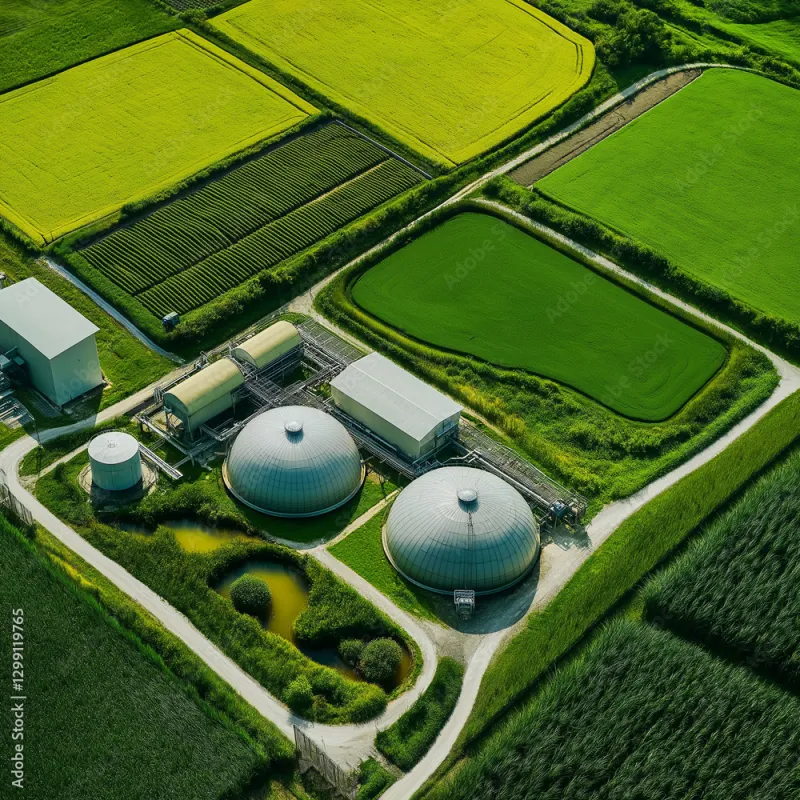
Photo: Christian Ferrer, CC BY 4.0, via Wikimedia Commons
For decades, plugging a manufacturing facility into the regional power grid felt like the straightforward, low-risk choice. The infrastructure was already there. The billing was predictable enough. And the alternatives seemed complex, expensive, or both. That calculus has shifted dramatically — and the industrial operators who have not yet recognized the shift are carrying a hidden burden that is eroding their margins, elevating their regulatory risk profile, and leaving them exposed to disruptions that their competitors are already engineering around.
At Sri Balaji BioEnergies, we work closely with industrial clients across the United States who are confronting this reality. What we consistently find is that the true cost of grid dependency is rarely visible on a single line item. It accumulates across energy volatility, compliance overhead, carbon liability, and operational downtime — and it compounds over time in ways that most facility managers only recognize in hindsight.
The Invisible Price Tag on Grid-Only Operations
The U.S. power grid, despite ongoing modernization efforts, remains a system built largely on mid-twentieth-century assumptions about demand, generation, and distribution. Industrial facilities drawing significant load from that grid are exposed to price volatility tied to natural gas fluctuations, regional transmission congestion, and increasingly frequent weather-related disruptions. The Federal Energy Regulatory Commission has documented rising instances of grid stress events across multiple ISO regions, and the trend is not reversing.
Beyond raw energy costs, there is the matter of carbon accounting. As the U.S. regulatory environment tightens — with the EPA advancing emissions reporting requirements and several states implementing their own carbon pricing mechanisms — manufacturers that rely entirely on grid electricity are inheriting the carbon intensity of whatever fuel mix their regional utility happens to be running on a given day. That is a liability that is difficult to quantify, harder to hedge, and increasingly scrutinized by institutional investors and large-enterprise procurement teams that require supply chain sustainability disclosures.
The picture becomes more acute when you factor in insurance costs, which are quietly rising in regions prone to extreme weather, and the productivity losses associated with unplanned outages. A 2023 analysis by Lawrence Berkeley National Laboratory estimated that power interruptions cost U.S. businesses over $150 billion annually — a figure that disproportionately burdens energy-intensive industrial operations.
How Hybrid Bioenergy Systems Change the Equation
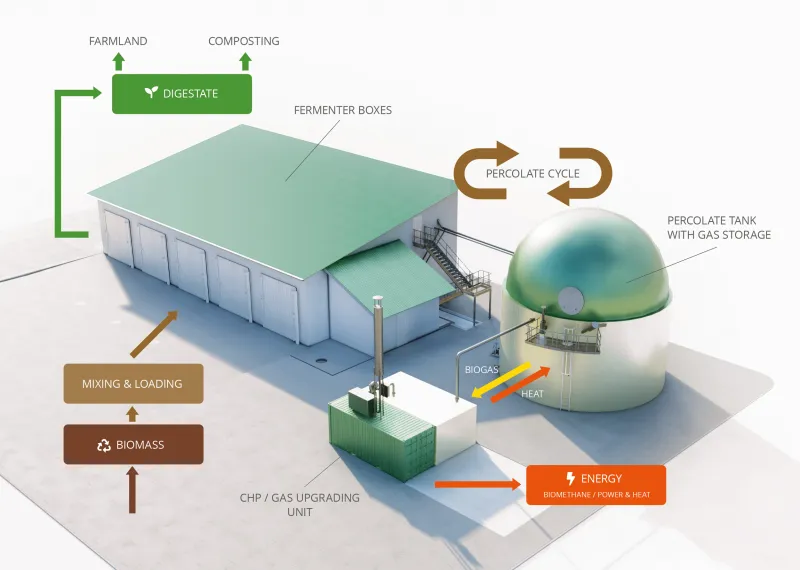
A hybrid bioenergy system does not ask a facility to abandon the grid entirely. Rather, it integrates on-site bioenergy generation — typically biogas from organic waste streams, biomass combustion, or anaerobic digestion — with existing grid infrastructure and, in many configurations, battery storage or combined heat and power (CHP) units. The result is a layered energy architecture that gives facility managers genuine control over their cost exposure and carbon footprint.
Consider a mid-sized food processing operation in the Midwest that generates substantial organic waste daily. By installing an anaerobic digestion unit, that facility can convert its waste stream into biogas, run that biogas through a CHP system, and supply a meaningful percentage of its own electricity and thermal energy needs. The grid connection remains — serving as a backup and a balancing mechanism — but the facility's dependence on it is materially reduced. Energy costs stabilize. Waste disposal costs decline. And the facility's Scope 1 and Scope 2 emissions drop in ways that can be reported, verified, and communicated to stakeholders.
A comparable scenario plays out in the paper and pulp sector, where biomass residuals have long been available but underutilized. Facilities that have moved to capture that energy internally report not only reduced utility expenditures but also measurably improved grid resilience scores — a metric that is becoming relevant to both insurers and lenders.
Addressing the Implementation Barriers Honestly
It would be misleading to suggest that transitioning to a hybrid bioenergy configuration is without friction. The upfront capital requirement is real, and it varies considerably based on facility size, existing infrastructure, waste stream composition, and local permitting conditions. For a mid-sized industrial operation, initial system integration costs can range from several hundred thousand dollars to well into the millions, depending on scope.
That said, the financing landscape has shifted considerably in favor of industrial bioenergy investment. The Inflation Reduction Act extended and expanded investment tax credits for biogas and biomass energy systems, and the U.S. Department of Agriculture's Rural Energy for America Program continues to offer grants and loan guarantees for eligible facilities. Power purchase agreements and energy-as-a-service models have also matured, allowing some operators to deploy hybrid systems with minimal upfront capital by contracting with a developer who owns and operates the infrastructure.
Permitting timelines represent another genuine challenge, particularly for anaerobic digestion systems that require air quality and waste management approvals. Experienced project developers — those with a track record of navigating state-level environmental agency processes — can compress these timelines significantly. The facilities that encounter the most difficulty are typically those that attempt to manage the permitting process without dedicated expertise.
ROI Timelines: What Realistic Expectations Look Like
Simple payback periods for well-designed hybrid bioenergy systems in industrial settings typically range from five to ten years, with a wide band depending on local energy prices, available incentives, and the volume and quality of the organic waste stream being utilized. Facilities in states with higher commercial electricity rates — California, New York, and New England broadly — tend to see the faster paybacks. Those in regions with lower utility rates may require a longer horizon but still benefit substantially from the regulatory risk mitigation and resilience value that the system provides.
It is also worth noting that the ROI calculation changes meaningfully when avoided costs are included. Waste disposal fees, carbon credit purchases, and the productivity cost of downtime events are all legitimate line items in a comprehensive analysis — and they frequently shift the economics in favor of earlier action.
The Strategic Imperative
The industrial facilities that will be best positioned in 2030 are not necessarily the largest or the most technologically sophisticated today. They are the ones that are making deliberate, well-structured investments now in energy architectures that reduce their exposure to forces beyond their control. Hybrid bioenergy systems represent one of the most practical and proven pathways to that kind of operational independence.
At Sri Balaji BioEnergies, our work is grounded in the conviction that clean energy and competitive advantage are not in tension — they are increasingly the same thing. The hidden carbon cost of grid dependency is real, and it is growing. The good news is that the tools to address it are available, the economics are improving, and the window for early-mover advantage remains open.