The Clean Energy Transition Doesn't Eliminate Plant Jobs — It Transforms Them
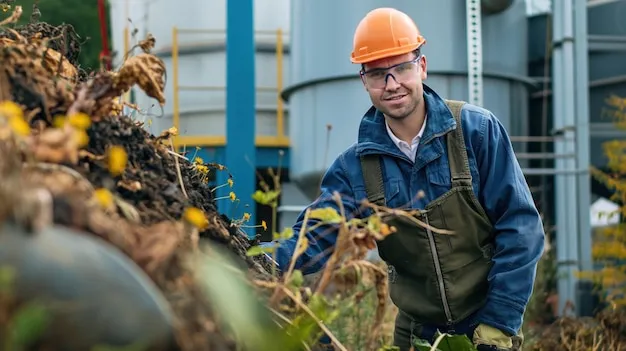
Photo: industrial workers renewable energy training bioenergy plant technicians, via img.freepik.com
Let us be direct about something: the fear that renewable energy adoption will hollow out industrial workforces is not a fringe concern. It is a legitimate anxiety held by skilled tradespeople, union representatives, and plant managers across the United States — and it deserves a serious, honest response rather than a dismissive talking point about the green economy.
The honest response is this: the shift to bioenergy systems at industrial facilities does not reduce headcount in any straightforward way. What it does do — and this is the part that demands urgent attention from facility leadership — is change the composition of skills that a competitive plant operation requires. That change is an opportunity. But capturing it requires intentional action, and the facilities that are moving proactively are already pulling ahead.
What Bioenergy Infrastructure Actually Requires of a Workforce
When a manufacturing facility integrates an anaerobic digestion unit, a biogas upgrading system, or a combined heat and power installation, it is not replacing its existing operational team. It is adding a layer of technical complexity that requires someone to manage it. That someone — or more accurately, those several someones — need a specific combination of competencies that sit at the intersection of traditional mechanical and electrical trades and newer disciplines in process chemistry, emissions monitoring, and digital controls.
In practical terms, a mid-sized facility that installs a biogas system will typically need operators trained in feedstock handling and quality management, technicians capable of maintaining gas cleaning and compression equipment, personnel fluent in SCADA systems and real-time process monitoring, and staff who understand the regulatory reporting obligations that come with on-site generation. None of these roles require starting from scratch. A skilled millwright, an experienced instrumentation technician, or a veteran boiler operator has a significant head start on every one of them.
The skills gap is real, but it is narrower than the alarmist narrative suggests — provided that facility managers invest in bridging it deliberately.
The Training Landscape Is More Accessible Than You Think
One of the more encouraging developments in U.S. workforce policy over the past several years is the growing ecosystem of training resources specifically oriented toward clean energy transitions in industrial settings. The Department of Energy's Office of Energy Efficiency and Renewable Energy has funded workforce development programs through community college networks in manufacturing-heavy states including Ohio, Michigan, Pennsylvania, and Texas. The Inflation Reduction Act's prevailing wage and apprenticeship provisions have created additional incentives for employers to formalize training pathways for clean energy work.
For facility managers, the practical starting point is a skills gap analysis conducted in parallel with the early engineering phases of a bioenergy project. Waiting until the system is commissioned to think about workforce readiness is one of the most common — and most costly — mistakes we observe. By the time the anaerobic digester is online, you want your operators already trained, not learning on the job during a critical startup period.
Partnerships with regional community colleges and technical institutes are particularly valuable here. Many of these institutions have developed certificate programs in biogas technology, renewable energy systems, and industrial process control that can be customized for employer-specific contexts. Some are willing to deliver training on-site, which reduces the disruption to operations and keeps the learning grounded in the actual equipment your team will be working with.
Change Management: The Dimension That Technical Plans Routinely Underestimate
Every bioenergy implementation project has a technical dimension and a human dimension. Engineering firms are well-equipped to handle the former. The latter is frequently underserved — and the consequences show up as delayed commissioning, elevated turnover among experienced staff, and a cultural resistance that makes ongoing optimization difficult.
The facilities that navigate this most successfully share a common characteristic: leadership that communicates early, communicates often, and treats the transition as something being done with the workforce rather than to it. When workers understand why a bioenergy system is being installed — what it means for the facility's long-term competitiveness, how it affects their specific roles, and what opportunities it creates for skill development and advancement — the resistance that typically accompanies change is substantially reduced.
This is not a soft consideration. It is an operational one. A bioenergy system that is technically sound but operationally undermined by disengaged or undertrained staff will underperform its design specifications. The ROI projections that justified the capital investment will not materialize. And the facility will have spent significant resources on infrastructure that is not delivering its full value.
Formal change management frameworks — including structured communication plans, role-specific transition roadmaps, and feedback mechanisms that give workers a genuine voice in implementation decisions — are not bureaucratic overhead. They are risk mitigation tools.
Hiring Strategy for the Bioenergy-Integrated Facility
For facilities that determine they need to bring in new expertise rather than — or in addition to — upskilling existing staff, the hiring landscape presents both challenges and opportunities. Experienced biogas plant operators and renewable energy process technicians are in demand, and compensation expectations have risen accordingly. Facilities that can offer the stability of an established industrial employer, combined with the professional development appeal of working on emerging clean energy technology, are well-positioned to attract strong candidates.
It is also worth considering the adjacent talent pools that are often overlooked. Water and wastewater treatment operators have process chemistry knowledge that transfers directly to anaerobic digestion. Agricultural equipment technicians understand organic material handling in ways that are immediately applicable to feedstock management. Military veterans with training in power generation and fuel systems bring disciplined technical competencies that align well with bioenergy operations.
Building relationships with technical schools and community colleges before a hiring need becomes urgent is a strategy that consistently outperforms reactive recruitment. Facilities that establish internship pipelines, participate in curriculum advisory boards, and offer apprenticeship pathways are creating a durable talent advantage.
A Progressive Vision for Industrial Employment
At Sri Balaji BioEnergies, our perspective on workforce transformation is straightforward: the clean energy transition, executed thoughtfully, is one of the best things that can happen to the long-term employment prospects of American industrial workers. It creates roles that are technically sophisticated, operationally essential, and difficult to automate or offshore. It invests in the communities where manufacturing facilities are located. And it positions those facilities for the kind of sustained competitiveness that preserves employment over the long arc.
The facilities that will look back on this period as a turning point for the better are the ones that are treating workforce readiness as a first-order strategic priority — not an afterthought to the engineering plan. The transition is coming regardless. The question is whether your plant will lead it or be led by it.