Five Bioenergy Myths That Are Quietly Draining Your Company's Competitive Edge

Photo: corporate sustainability renewable energy executive meeting green technology, via img.freepik.com
Why Misinformation About Bioenergy Carries a Price Tag
In boardrooms and procurement offices across the United States, bioenergy frequently encounters a wall of skepticism built not from data, but from outdated narratives, incomplete information, and the lingering influence of early-generation biofuel controversies. The result is that many corporate energy and sustainability teams dismiss bioenergy before a proper evaluation ever takes place.
That dismissal is expensive. As grid electricity costs continue to rise, as waste disposal fees escalate, and as federal incentives for renewable energy infrastructure reach historic levels under the Inflation Reduction Act, companies that are operating on flawed assumptions about bioenergy are leaving quantifiable value on the table.
At Sri Balaji BioEnergies, we engage with industrial clients at every stage of the decision-making process, and we encounter the same misconceptions repeatedly. What follows is a direct, evidence-based response to the five myths that most consistently impede sound energy strategy.
Myth 1: Bioenergy Competes With Food Production and Drives Up Land Prices
The Reality: This concern is rooted in the early 2000s corn ethanol debate, and it has been applied far too broadly to the entire bioenergy sector ever since.
The bioenergy solutions most relevant to industrial and corporate clients do not involve dedicated energy crops grown on agricultural land. Modern industrial bioenergy draws primarily from organic waste materials that already exist within existing supply chains: food processing residuals, agricultural byproducts, municipal biosolids, forestry and mill waste, and the organic fraction of commercial solid waste.
According to the US Department of Energy's Billion-Ton Report, the United States generates more than one billion dry tons of biomass feedstock annually from waste and residue sources alone — without touching a single acre of food-producing farmland. The land-use conflict narrative simply does not apply to waste-based bioenergy systems, which represent the overwhelming majority of industrial deployments today.
For a corporate decision-maker, the relevant question is not "Will this displace food production?" but rather "What organic waste does my facility already generate, and what energy value is currently being discarded?"
Myth 2: Bioenergy Produces Significant Carbon Emissions and Is Not Genuinely Green
The Reality: This myth conflates the carbon accounting of bioenergy with that of fossil fuels, and the distinction is fundamental.
When biomass or biogas is combusted, carbon dioxide is released. Critics who stop the analysis there are omitting the most important part of the equation. The carbon released during bioenergy combustion was absorbed from the atmosphere by living organisms — crops, trees, food materials — within a recent, biologically meaningful timeframe. This is categorically different from fossil fuels, which release carbon that has been sequestered underground for millions of years, adding net new carbon to the atmospheric cycle.
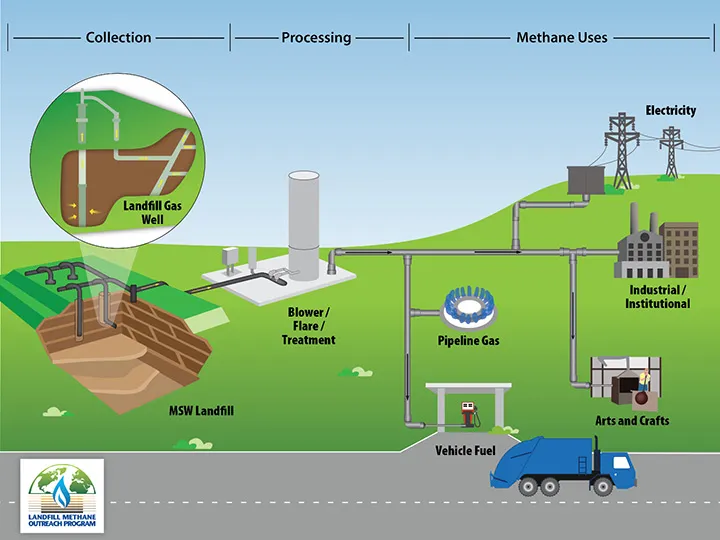
Furthermore, when organic waste is diverted from landfills to anaerobic digestion systems, the alternative outcome — uncontrolled decomposition releasing methane, a greenhouse gas with a warming potential approximately 28 times that of CO₂ over a 100-year period — is avoided entirely. The EPA's own waste management hierarchy recognizes anaerobic digestion as a substantially superior environmental outcome compared to landfilling organic material.
Well-designed industrial bioenergy systems, particularly those utilizing waste feedstocks, consistently demonstrate lifecycle carbon intensities that are dramatically lower than grid electricity or on-site fossil fuel combustion. For companies with Scope 1 and Scope 2 emissions reduction commitments, this distinction matters enormously.
Myth 3: Bioenergy Is Only Viable for Large-Scale Utilities — Small and Mid-Sized Facilities Cannot Benefit
The Reality: This assumption was perhaps defensible a decade ago, when bioenergy technology was still maturing and project economics favored very large installations. It is no longer accurate.
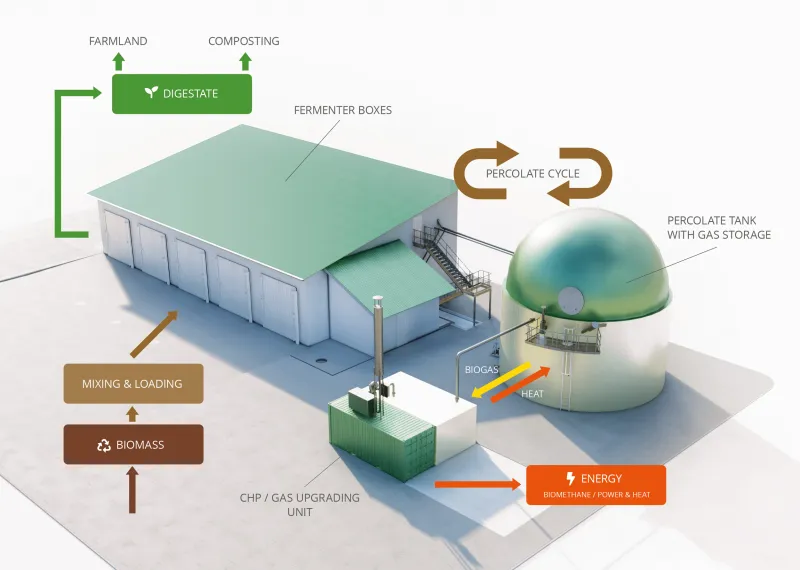
Modular anaerobic digestion systems are now commercially available and economically viable for facilities generating as little as five to ten tons of organic waste per day. Containerized biogas systems, small-scale biomass gasifiers, and pre-engineered CHP units have reduced both the capital threshold and the engineering complexity associated with on-site bioenergy deployment.
A mid-sized food distribution center, a regional brewery, a university campus, or a mid-scale meat processor — all generate sufficient organic waste to support a meaningfully sized bioenergy system. The financial case for these smaller deployments has been strengthened considerably by the expanded tax credit provisions in the Inflation Reduction Act, which apply at any project scale and can reduce effective capital costs by 30 percent or more.
The notion that bioenergy is exclusively the province of large utilities or agricultural conglomerates reflects a market reality that simply no longer exists.
Myth 4: The Permitting and Regulatory Process Makes Bioenergy Projects Impractical
The Reality: Regulatory complexity is real, but it is manageable — and it is frequently overstated by decision-makers who conflate the permitting requirements of large utility-scale projects with those of on-site industrial installations.
On-site bioenergy systems at industrial facilities typically fall under a different, less burdensome regulatory tier than centralized power generation. Air quality permits, waste handling authorizations, and interconnection agreements are the primary regulatory touchpoints, and experienced project developers navigate these routinely. In many states, streamlined permitting pathways have been established specifically for on-site renewable energy and waste-to-energy projects.
Moreover, the regulatory landscape has become progressively more favorable, not less. States including California, Oregon, Colorado, and New York have enacted policies that actively incentivize on-site bioenergy deployment as part of broader organic waste diversion mandates. In these jurisdictions, regulatory compliance is increasingly a driver toward bioenergy adoption, not a barrier against it.
The practical implication for corporate teams: regulatory due diligence is a necessary step, not a disqualifying obstacle. With the right development partner, the permitting timeline for an on-site industrial bioenergy project is typically twelve to twenty-four months — a reasonable horizon for a capital asset with a twenty-five-year operational lifespan.
Myth 5: The Economics of Bioenergy Cannot Compete With Conventional Energy in Today's Market
The Reality: This is perhaps the most consequential myth of all, because it is the one most likely to cause a company to forgo a rigorous financial analysis entirely.
The economic case for industrial bioenergy has never been stronger, and it rests on multiple simultaneous value drivers rather than a single revenue stream:
- Industrial electricity prices have risen sharply and are projected to continue rising as grid infrastructure investment requirements grow
- Organic waste disposal costs are increasing in most US markets as landfill capacity tightens and state-level diversion mandates take effect
- Federal tax incentives under the Inflation Reduction Act provide direct capital cost reductions unavailable to conventional energy investments
- Renewable Natural Gas (RNG) commands a significant market premium over conventional natural gas, creating an additional revenue pathway for facilities that upgrade biogas
- Carbon markets and environmental attribute trading offer supplementary revenue streams that improve overall project economics
When these factors are modeled together in a credible financial analysis, the levelized cost of energy from a well-designed on-site bioenergy system is frequently competitive with — or superior to — continued grid dependence, even before accounting for the operational resilience benefits that decentralized generation provides.
The companies that are winning on energy costs in the current environment are not those that dismissed bioenergy based on decade-old assumptions. They are the ones that commissioned rigorous feasibility studies, stress-tested the financial models, and made capital allocation decisions grounded in current market reality.
Replacing Assumptions With Analysis
Misconceptions are not merely intellectual inconveniences — in a corporate context, they carry a direct financial cost. Every year that a bioenergy-viable facility continues to pay escalating grid rates and waste disposal fees, while federal incentives remain on the table, represents a quantifiable opportunity cost.
Sri Balaji BioEnergies works with industrial and corporate clients to replace assumptions with analysis. Our feasibility assessments are designed to give energy and sustainability decision-makers the data they need to evaluate bioenergy on its actual merits — not on the basis of myths that have long since been overtaken by technological progress and market reality.
The competitive advantage in industrial energy strategy belongs to those who ask the right questions. The first question worth asking is: what is our outdated thinking actually costing us?