America's Landfills Are Leaking Opportunity—And Bioenergy Is the Answer Industry Can't Afford to Ignore
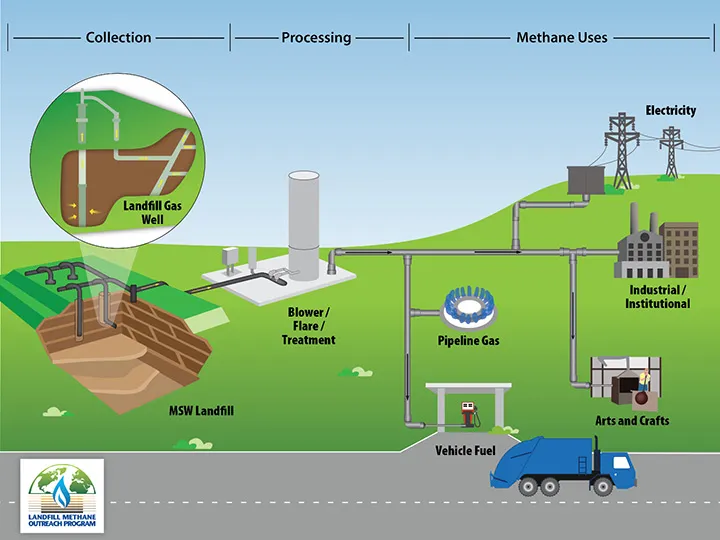
Photo: landfill methane capture biogas renewable energy waste management environmental, via ceees.nd.edu
There is a quiet catastrophe unfolding beneath the surface of more than 2,600 active landfills across the United States. It does not generate headlines with the urgency of an oil spill or a chemical leak, but its cumulative environmental impact rivals both. Methane—a greenhouse gas approximately 80 times more potent than carbon dioxide over a 20-year period—is escaping from decomposing organic waste at a scale that undermines the nation's climate commitments and represents an extraordinary squandering of renewable energy potential.
This is not a new problem. What is new is the urgency with which regulators, investors, and forward-thinking industrial leaders are beginning to treat it. And at the center of the solution is a technology that Sri Balaji BioEnergies has long championed: bioenergy derived from waste streams that would otherwise poison the atmosphere while generating zero economic value.
The Scale of What We Are Losing
Let us be direct about the numbers. The US Environmental Protection Agency estimates that landfills are the third-largest source of human-related methane emissions in the country, accounting for roughly 14 percent of total US methane output. Municipal solid waste landfills alone released an estimated 109 million metric tons of carbon dioxide equivalent in 2021—a figure that represents not just an environmental liability but a massive untapped energy resource.
To translate that into practical terms: the methane currently escaping from American landfills contains enough energy to power millions of homes annually. Instead, it drifts into the atmosphere, accelerating the very climate disruption that is already increasing operational costs for manufacturers through supply chain disruptions, extreme weather events, and rising insurance premiums.
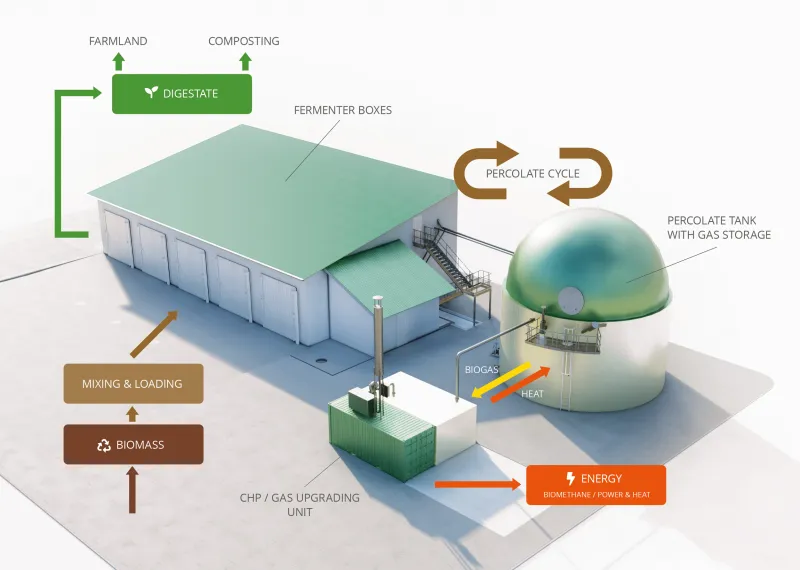
The industrial waste picture is equally troubling. Food processors, breweries, paper mills, and agricultural operations collectively generate billions of gallons of organic effluent and solid waste every year. A significant portion of this material ends up in landfills or is managed through energy-intensive treatment processes, when it could instead serve as feedstock for anaerobic digesters that generate biogas, reduce waste disposal costs, and produce nutrient-rich digestate suitable for agricultural application.
The Regulatory Landscape Is Shifting—Faster Than Many Realize
For years, the economic case for landfill gas capture and industrial biogas development was compelling but not yet urgent from a compliance standpoint. That era is ending.
The EPA's updated regulations under the Clean Air Act are tightening emission standards for municipal solid waste landfills, reducing the thresholds at which landfill gas collection systems are required and shortening the compliance timelines for existing facilities. States including California, New York, and Washington have enacted or are advancing organic waste diversion mandates that effectively prohibit certain categories of organic material from landfill disposal—creating both regulatory pressure and feedstock opportunity for bioenergy developers.
The Securities and Exchange Commission's climate disclosure rules, finalized in 2024, are compelling publicly traded companies to quantify and report their Scope 1 and Scope 2 greenhouse gas emissions with greater rigor than ever before. For industrial companies whose operations generate significant organic waste, the methane emissions associated with landfill disposal of that waste are increasingly visible in regulatory filings—and increasingly uncomfortable for investors and board members to explain.
Perhaps most significantly, the Inflation Reduction Act has fundamentally improved the economics of biogas and renewable natural gas (RNG) projects through enhanced tax incentives, making projects viable that would not have cleared financial hurdles under previous policy frameworks.
Why This Is an Industrial Opportunity, Not Just an Environmental Obligation
It is tempting to frame the landfill methane problem purely through an environmental lens. Doing so, however, understates the genuine commercial opportunity that bioenergy represents for US manufacturers and industrial operators.
Consider the food and beverage sector, which generates an estimated 80 million tons of food waste annually in the United States. A substantial portion of this material carries disposal costs, regulatory complexity, and reputational risk. When captured and processed through anaerobic digestion, that same material becomes a revenue-generating asset—producing biogas for on-site energy use or pipeline injection as RNG, and generating digestate that can be sold as a soil amendment or fertilizer substitute.
The paper and pulp industry presents another compelling case. Wastewater from pulp processing is rich in organic content and has long been managed as a treatment burden. Leading facilities have demonstrated that converting this effluent into biogas not only reduces treatment costs but generates sufficient energy to power meaningful portions of mill operations—reducing dependence on grid electricity and fossil fuel inputs simultaneously.
For agricultural processors—grain handlers, meat packers, dairy cooperatives—the convergence of organic waste volume, energy demand, and available incentives creates project economics that are increasingly difficult to dismiss. These operations often have both the feedstock and the energy load required to make on-site biogas systems financially self-sustaining within a reasonable investment horizon.
The Technologies Closing the Gap
One of the most important developments in this space over the past decade has been the maturation of the technologies themselves. Early-generation anaerobic digesters were often plagued by operational complexity, inconsistent performance, and high maintenance demands that deterred industrial adoption. Modern systems are substantially more robust, with advanced monitoring and control systems that optimize gas yields, manage feedstock variability, and reduce operator burden.
Beyond conventional anaerobic digestion, emerging technologies are expanding the range of waste streams that can be economically converted to bioenergy. Thermal gasification systems can process non-digestible organic fractions. Advanced membrane separation technologies improve the economics of biogas upgrading to pipeline-quality RNG. Modular digester designs are reducing the minimum viable scale for on-site biogas generation, making the technology accessible to mid-sized industrial operations that previously lacked sufficient waste volume to justify a project.
The integration of biogas systems with existing industrial infrastructure has also become more sophisticated. Co-digestion—the simultaneous processing of multiple waste streams in a single digester—allows facilities to optimize gas production by blending feedstocks with complementary biochemical profiles, improving both system efficiency and project economics.
What Industrial Leaders Should Be Doing Right Now
The path from recognizing the opportunity to realizing its benefits requires deliberate action. For industrial operators who have not yet conducted a formal assessment of their bioenergy potential, the first step is a comprehensive waste stream audit—quantifying the volume, composition, and energy content of organic materials currently being disposed of or treated at cost.
This audit frequently reveals that the bioenergy potential of an industrial operation is substantially larger than leadership assumed. It also provides the foundation for a preliminary financial model that can be used to evaluate project feasibility, identify applicable incentives, and build the internal business case required to secure capital approval.
Engaging with experienced bioenergy developers and policy specialists early in the process is equally important. The regulatory landscape, incentive structures, and permitting requirements governing biogas projects are complex and jurisdiction-specific. Companies that attempt to navigate these dimensions without expert guidance frequently encounter delays and missed opportunities that erode project returns.
The Cost of Continued Inaction
At Sri Balaji BioEnergies, we are unequivocal in our assessment: the environmental cost of landfill methane is no longer an abstraction, and the commercial opportunity embedded in industrial waste streams is no longer speculative. Both are concrete, quantifiable, and growing in urgency.
The industrial leaders who will be best positioned in the coming decade are those who treat their waste streams not as liabilities to be managed at minimum cost, but as strategic assets to be converted into clean energy, regulatory compliance, and competitive differentiation. The technology is proven. The incentives are in place. The regulatory trajectory is clear.
The only remaining question is whether your organization will lead this transition—or be compelled to follow it.