Energy Price Volatility Is a Supply Chain Risk — Here's How Biogas Turns That Threat Into a Strategic Shield
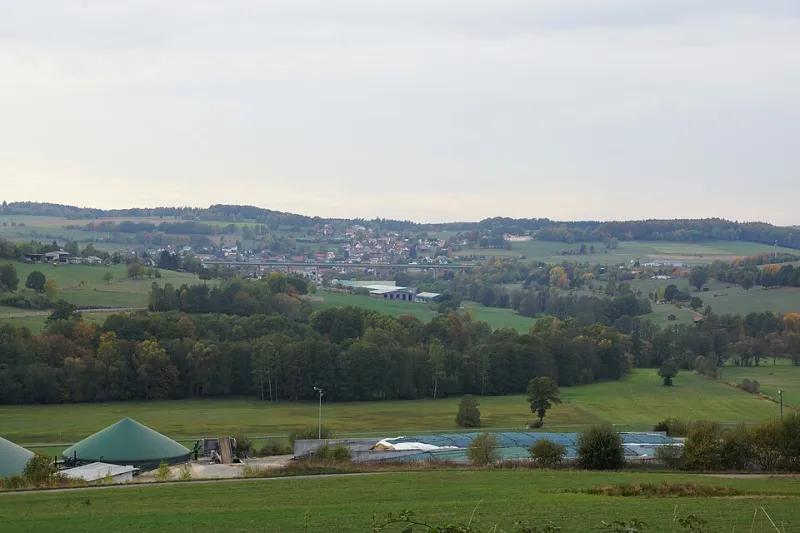
Photo: Verum, CC BY-SA 3.0, via Wikimedia Commons
For decades, energy purchasing was treated as a procurement function — a line item to be managed, renegotiated periodically, and largely accepted as a fixed cost of doing business. That assumption no longer holds. Over the past several years, natural gas spot prices have swung dramatically, electricity markets have tightened across multiple U.S. regions, and geopolitical disruptions have demonstrated, repeatedly, that fossil fuel supply chains are far more fragile than they appear on a balance sheet.
What is less frequently discussed is the downstream effect of that fragility. When energy costs spike unexpectedly, manufacturers face a cascading set of pressures: production margins compress, logistics costs rise, and customer commitments made under prior cost assumptions become difficult to honor. In short, energy volatility is not merely a financial inconvenience — it is a supply chain risk with the potential to undermine delivery reliability, pricing stability, and long-term competitiveness.
The manufacturers who are navigating this environment most effectively share a common characteristic: they have reduced their dependence on purchased energy by producing a meaningful share of their own, primarily through on-site biogas generation.
The Structural Problem With Purchased Energy
The U.S. industrial sector consumes roughly one-third of all energy used nationally, and the vast majority of that energy is purchased from external sources — utilities, natural gas distributors, or wholesale electricity markets. Each of those sources introduces a layer of price exposure that facility managers cannot fully control.
Natural gas, for instance, is priced on spot and futures markets that respond to weather events, pipeline constraints, LNG export volumes, and international demand signals. The winter 2021 Texas freeze demonstrated in stark terms how rapidly those prices can move — Henry Hub spot prices briefly exceeded $1,000 per MMBtu in certain regional markets, an increase of several thousand percent over normal trading ranges. Manufacturers operating in affected areas absorbed losses that took quarters to recover from, and many had no contractual or operational mechanism to cushion the impact.
Electricity markets introduce a parallel set of risks. Grid congestion, renewable intermittency, and aging transmission infrastructure all contribute to price volatility, particularly during peak demand periods. For energy-intensive manufacturers — food processors, chemical producers, pulp and paper facilities, and similar operations — these are not theoretical risks. They are recurring budget disruptions.
Biogas as a Risk Management Instrument
On-site biogas generation addresses energy price volatility at its root by converting waste streams that a facility already produces into a fuel source that the facility controls. The feedstock — organic waste, wastewater biosolids, agricultural residuals, food processing byproducts — is generated continuously as a function of normal operations. Its cost is, in most cases, already absorbed as a waste disposal expense. Converting that material into biogas through anaerobic digestion effectively transforms a liability into a predictable energy asset.
The financial logic is straightforward but worth modeling carefully. A facility that displaces 30 to 50 percent of its natural gas consumption with on-site biogas is not merely saving money at today's prices — it is eliminating a proportional share of its exposure to future price increases. If natural gas prices rise 40 percent over the next three years, that facility's effective exposure to the increase is reduced by whatever share of consumption it has replaced with self-generated fuel. The biogas itself does not fluctuate with commodity markets.
This is the distinction that financial planners and CFOs are beginning to internalize: biogas is not simply a cheaper form of energy in the present tense. It is a hedge against an uncertain future, with a cost basis that is determined largely by capital investment and operating efficiency rather than market forces.
Financial Modeling That Supports the Business Case
For facilities evaluating on-site biogas, the financial model typically rests on several interconnected variables: the volume and consistency of available feedstock, the capital cost of the digestion and gas processing infrastructure, applicable federal and state incentives, and the avoided cost of both purchased energy and waste disposal.
Under the Inflation Reduction Act, biogas projects may qualify for Investment Tax Credits and Production Tax Credits depending on how the gas is used — whether for direct thermal applications, electricity generation, or upgrading to renewable natural gas for pipeline injection or vehicle fuel. These incentives can meaningfully shorten payback periods, often bringing projects into the five-to-eight-year range even before accounting for waste disposal savings.
Waste disposal savings deserve particular emphasis. Many industrial facilities pay significant tipping fees or treatment costs to manage organic waste. When that waste becomes a feedstock rather than a disposal problem, the avoided cost effectively subsidizes the energy project — a dynamic that does not exist with solar or wind installations, which require a dedicated capital outlay without the offsetting waste management benefit.
Long-term offtake agreements and power purchase agreements can further stabilize the financial picture. Facilities that generate biogas-derived electricity, for example, may enter agreements with utilities or third-party purchasers that lock in a revenue stream for ten to twenty years, providing the kind of cost predictability that purchased energy markets categorically cannot offer.
Lessons From the Field
A number of large-scale U.S. manufacturers have already demonstrated the viability of this approach. Food and beverage producers — a sector with both high energy intensity and abundant organic waste — have been among the earliest adopters. Several major dairy processors and breweries have commissioned on-site anaerobic digestion systems that supply a substantial share of their facility energy needs, insulating them from the natural gas price cycles that affect competitors who rely exclusively on purchased fuel.
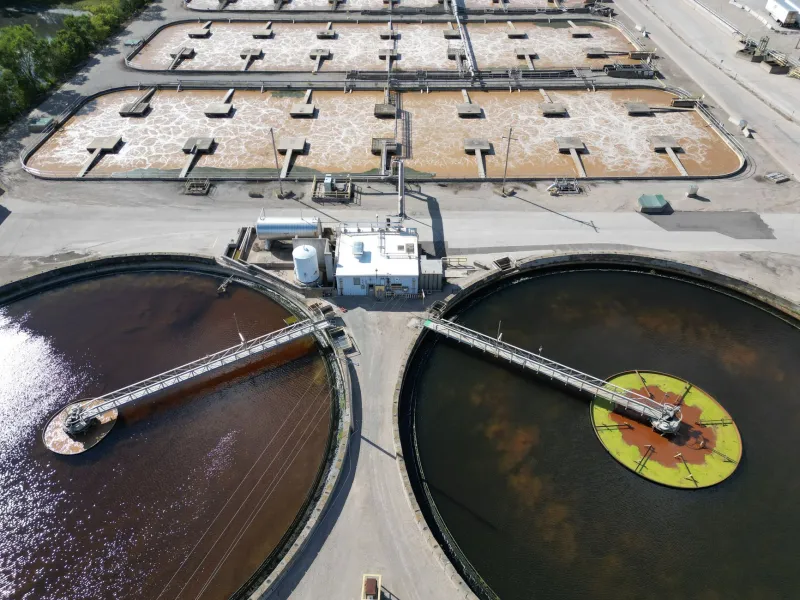
Municipal and industrial wastewater treatment facilities have similarly advanced the model. By capturing methane from biosolids digestion and using it to power treatment operations, these facilities have transformed a regulatory compliance function into an energy production asset — and, in some cases, generated surplus electricity sold back to the grid.
The pattern across these examples is consistent: the initial investment in biogas infrastructure pays dividends not only in direct energy savings but in the operational stability that comes from reduced market exposure. Procurement teams spend less time managing energy contracts. Finance teams face fewer budget surprises. Operations teams experience fewer disruptions tied to energy cost spikes.
Reframing the Conversation Around Competitive Advantage
The conventional framing of biogas investment centers on sustainability metrics — carbon reduction, ESG reporting, regulatory compliance. These are legitimate and important considerations. But for industrial decision-makers who are ultimately accountable to financial performance, the more compelling argument may be the one rooted in risk management.
A manufacturer that controls a meaningful share of its own energy supply is structurally more resilient than one that does not. It can quote customers with greater confidence, absorb market shocks with less disruption, and plan capital expenditures with more predictability. In industries where margins are thin and contract terms are long, that resilience translates directly into competitive advantage.
At Sri Balaji BioEnergies, we work with industrial clients across the United States to develop biogas systems that are engineered for their specific waste streams, energy profiles, and financial objectives. The goal is not simply to produce clean energy — it is to produce a more stable, more defensible business. In a market environment defined by volatility, that stability is itself a form of value that no commodity exchange can replicate.