When the Line Goes Quiet: How Biogas Infrastructure Protects Manufacturers From the Hidden Costs of Idle Operations
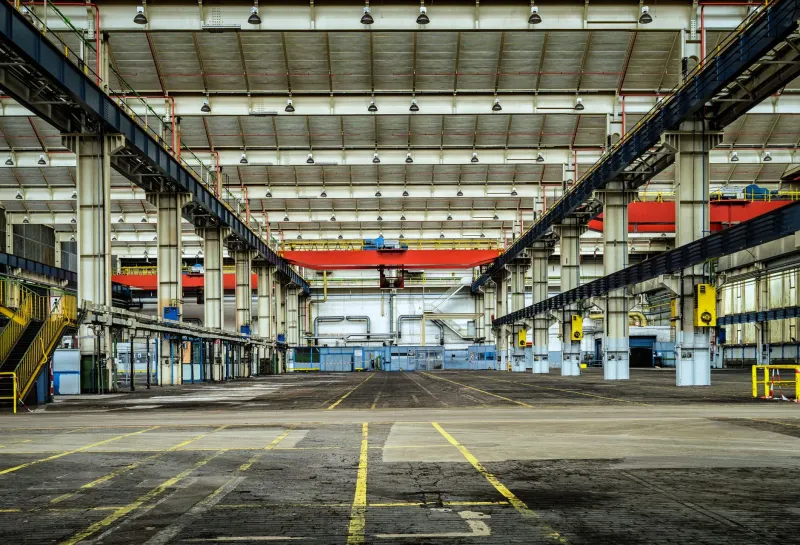
Market downturns have a way of exposing structural weaknesses that prosperity tends to conceal. When demand softens and production schedules contract, manufacturers often discover an uncomfortable truth: their energy costs don't contract with them. Electricity bills continue arriving. Thermal loads persist. Fixed infrastructure obligations remain. And all of it accumulates against a revenue base that has quietly shrunk.
This dynamic—what energy analysts increasingly describe as the "idle energy burden"—is one of the least-discussed threats to industrial profitability during cyclical downturns. It is also one of the most addressable, provided facilities have invested in the right energy architecture before conditions deteriorate.
On-site biogas generation, paired with thermal capture and intelligent load management, represents precisely that architecture. For manufacturers willing to look beyond the conventional grid-dependent model, it offers something genuinely transformative: the ability to decouple energy expenditure from production volume.
The Idle Energy Problem in Plain Terms
Consider a mid-sized food processing facility operating at 60 percent capacity during a slow quarter. Its production output has declined meaningfully, but its baseline energy consumption—lighting, HVAC, compressed air systems, refrigeration, equipment standby loads—remains largely intact. The utility bill reflects that reality without apology.
This is not an edge case. Across American manufacturing, idle and semi-idle equipment routinely accounts for 20 to 40 percent of a facility's total energy draw, depending on sector and operational configuration. During downturns, that percentage climbs as active production loads diminish while fixed consumption persists.
For facilities dependent entirely on grid electricity, there is no structural remedy. Every kilowatt-hour carries the same market rate whether it powers a running production line or a dormant conveyor waiting for orders to return. The cost is fixed; the value generated is not.
Biogas Changes the Fundamental Equation
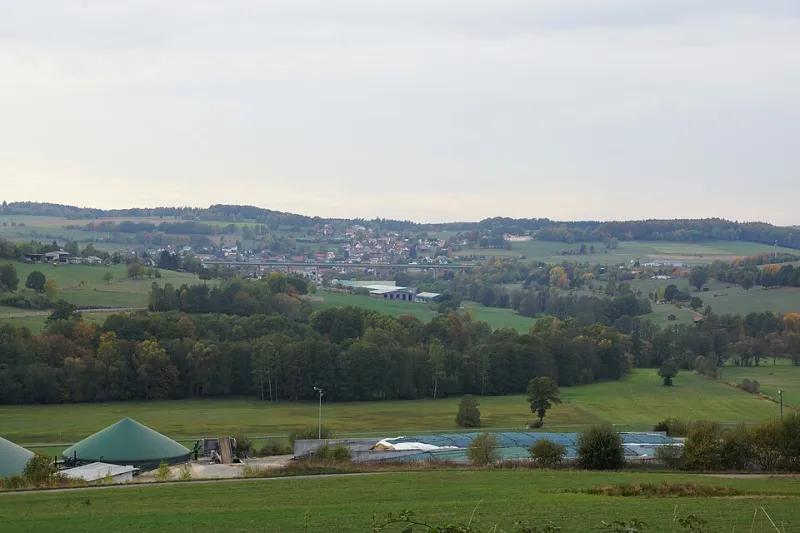
On-site biogas systems operate on a different logic entirely. When a facility generates energy from its own organic waste streams—agricultural byproducts, food processing residuals, wastewater solids—the marginal cost of that energy is largely independent of how much production output it supports in a given period.
The anaerobic digestion process that produces biogas does not pause because the production schedule has thinned. Organic feedstocks continue generating methane. Combined heat and power (CHP) units continue converting that methane into electricity and recoverable thermal energy. The facility's internal energy supply persists with a cost profile that reflects capital depreciation and operational maintenance—not fluctuating grid rates tied to regional demand or commodity markets.
This distinction matters enormously during downturns. When a biogas-equipped manufacturer reduces production by 30 percent, its energy cost structure does not spike relative to output the way a grid-dependent competitor's does. Instead, the facility may redirect surplus generated energy toward other productive uses: preheating process water, conditioning storage spaces, maintaining equipment at operational temperature to enable rapid restart when demand returns.
Thermal Capture as a Downturn Hedge
The thermal dimension of modern biogas infrastructure deserves particular attention in this context. CHP systems recover heat that would otherwise dissipate as waste—heat that can be stored, redirected, or used to offset what would otherwise be purchased natural gas or electric heating loads.
During periods of reduced production, that captured thermal energy becomes especially valuable. Facilities can use it to maintain environmental conditions in warehouses and staging areas, support refrigeration pre-cooling, or keep specialized equipment within operational temperature ranges without drawing from the grid or burning additional fuel. These are not trivial savings. Industrial thermal loads frequently represent 30 to 50 percent of a facility's total energy expenditure, and managing them efficiently during slow periods can materially protect operating margins.
Some advanced installations incorporate thermal storage buffers—insulated tanks or phase-change systems—that allow facilities to bank heat produced during lower-demand periods and deploy it when needs peak. This time-shifting capability further enhances the economic resilience that biogas infrastructure provides.
Avoiding the Restart Penalty
There is another dimension to idle energy management that rarely surfaces in standard financial analyses: the cost of equipment restart after extended dormancy. Industrial machinery that has been fully powered down—particularly equipment with precise temperature or pressure requirements—often demands significant energy input to return to operational readiness. Heating elements, hydraulic systems, and calibration-sensitive instruments may require hours of conditioning before production can resume.
Facilities with on-site biogas generation can maintain what engineers call "warm standby" states across critical equipment without the financial penalty of purchasing that maintenance energy from the grid. The biogas system continues producing; the facility continues using that output to keep infrastructure primed. When market conditions improve and orders resume, the restart is faster, cheaper, and less disruptive than it would be for a competitor that cut power entirely during the slow period.
In competitive manufacturing environments, the ability to respond quickly when demand returns is itself a strategic advantage. Customers who need supply restored quickly will favor the vendor that can deliver it.
Rethinking Fixed Costs as Controllable Assets
The conventional framing of energy costs treats them as largely fixed obligations—expenses that arrive regardless of production volume and must simply be absorbed. Biogas infrastructure challenges that framing at a structural level.
When a facility owns its energy production capability, the economics shift. Capital costs are amortized over time. Operational costs are predictable and internal. The energy produced has no spot market exposure. And critically, the system's output can be managed, redirected, and optimized in ways that grid-purchased electricity simply cannot be.
For CFOs and plant managers navigating the financial pressures of a demand downturn, that controllability is not a minor benefit. It is the difference between watching energy expenses erode margins and actively managing those expenses as a lever of operational resilience.
A Strategic Investment, Not a Tactical Expense
At Sri Balaji BioEnergies, we work with industrial clients across the United States who are increasingly approaching bioenergy infrastructure not as an environmental commitment alone, but as a core component of their operational risk management strategy. The environmental credentials are real and substantial. But so is the financial logic.
Manufacturers that invest in on-site biogas generation before a downturn arrives enter that downturn with a structural advantage. Their energy cost profile behaves differently. Their idle periods are less punishing. Their restart capability is faster. And their long-term margin structure is more defensible against the kind of external volatility—energy price spikes, grid disruptions, commodity fluctuations—that tends to concentrate during exactly the periods when production is already under pressure.
The line will go quiet again. It always does. The question is whether your energy infrastructure is designed to protect you when it does, or simply to bill you regardless.