Diesel Backup Is a Climate Liability: Why Biogas Resilience Systems Are Rewriting Industrial Emergency Planning
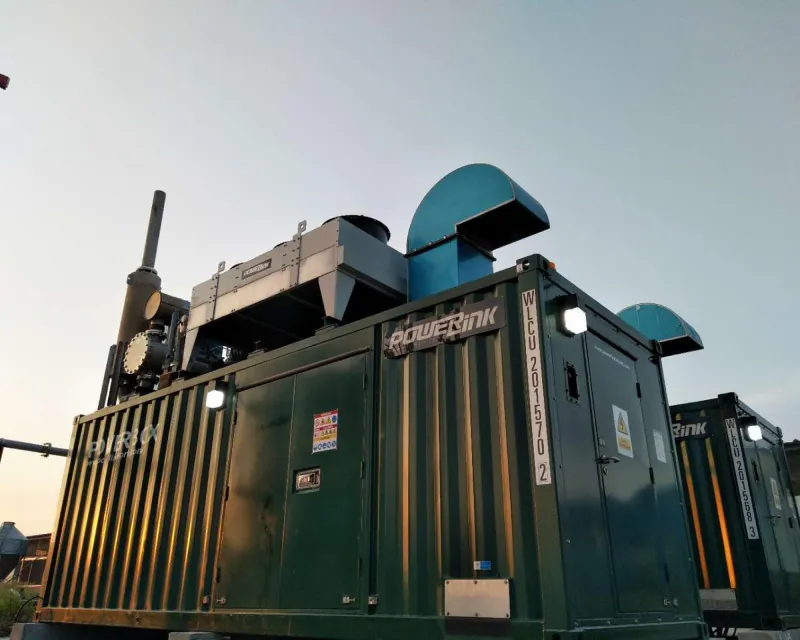
Photo: industrial biogas generator facility emergency power backup clean energy, via powerlinkenergy.com
The Generator in the Corner Is Costing You More Than You Think
Walk through virtually any industrial facility in the United States, and you will find at least one diesel generator sitting in reserve—dusty, rarely tested, and quietly accumulating liability. For decades, this arrangement has been treated as common sense. The grid goes down; the generator comes on. The logic seems airtight.
It isn't.
The operational and environmental costs embedded in conventional diesel backup systems have grown substantially more consequential as climate pressures mount. Extreme weather events are no longer rare disruptions; they are recurring features of the American industrial landscape. In 2023 alone, the U.S. experienced 28 separate billion-dollar weather disasters, many of which triggered extended grid outages across manufacturing corridors in the South, Midwest, and Gulf Coast. The facilities that absorbed the most damage—financial and reputational—were those still relying on diesel as their primary resilience strategy.
At Sri Balaji BioEnergies, we work with industrial clients across the country who are rethinking that assumption. The data they are encountering is difficult to ignore.
What Diesel Generators Actually Emit—and What That Means for Your Compliance Posture
A standard industrial diesel generator running at 500 kilowatts emits approximately 1.3 to 1.5 pounds of CO₂ per kilowatt-hour of electricity produced. That figure alone is unremarkable until you contextualize it against the duration of a serious grid disruption. A 72-hour outage at a mid-sized manufacturing plant can produce emissions equivalent to running a fleet of heavy-duty trucks for several weeks.
More critically, diesel generators also emit nitrogen oxides (NOₓ), particulate matter, and unburned hydrocarbons—pollutants that are increasingly regulated under both federal Clean Air Act provisions and a growing number of state-level air quality mandates. California's Air Resources Board has already imposed strict run-hour limits on emergency diesel generators, and similar frameworks are advancing in New York, Illinois, and Washington. For facility managers in these states, the question is not whether compliance costs will increase—it is when.
The carbon accounting implications extend further. Under Scope 1 emissions reporting frameworks, every hour a diesel generator operates is a direct emissions event that must be disclosed. For companies pursuing Science Based Targets (SBTi) commitments or responding to investor-driven ESG questionnaires, diesel backup systems represent a measurable vulnerability in their decarbonization narrative.
Total Cost of Ownership: The Number Diesel Advocates Prefer Not to Discuss
The upfront capital cost of a diesel generator is seductively low compared to more sophisticated alternatives. A 500 kW unit can be procured and installed for $150,000 to $250,000, a figure that looks favorable on a capital budget spreadsheet.
The total cost of ownership over a 15-year horizon tells a different story.
Diesel fuel prices are volatile. The average industrial diesel price in the U.S. fluctuated between $3.50 and $5.20 per gallon across 2022 and 2023, and supply chain disruptions during major weather events routinely push local prices higher precisely when demand spikes. Maintenance costs for diesel engines—including fuel system servicing, coolant replacement, load bank testing, and regulatory compliance testing—add $15,000 to $40,000 annually for a mid-sized unit. Over 15 years, a facility can realistically spend two to three times the original purchase price simply keeping the generator operational and compliant.
Biogas-powered backup systems, by contrast, draw from a fuel source that is either produced on-site or delivered through contracted biomethane supply agreements at predictable, locked rates. Operational costs stabilize. Maintenance intervals on biogas generators are comparable to diesel, but fuel price exposure is eliminated or dramatically reduced. When carbon credit revenues and avoided compliance penalties are factored in, the financial case for biogas resilience infrastructure becomes compelling within five to seven years at most facilities.
Emergency Response Performance: Separating Assumption from Reality
One of the most persistent arguments in favor of diesel generators is their perceived reliability in an emergency. They start fast, they run long, and they require no grid connection. This narrative, while partially accurate, obscures several operational realities that biogas systems handle more effectively.
First, diesel fuel stored on-site degrades. Diesel that has been sitting in a tank for 12 to 18 months—which is common in facilities that rarely experience outages—can cause fuel injector fouling and startup failures at the worst possible moment. Industry data suggests that between 10 and 25 percent of diesel generator failures during actual emergencies are attributable to fuel quality issues.
Biogas systems integrated with on-site anaerobic digesters or connected to pipeline-quality biomethane supplies do not face this problem. The fuel source is continuously renewed. When paired with battery buffer storage—an increasingly common configuration—biogas backup systems can achieve seamless transfer times of under 20 milliseconds, matching or exceeding diesel performance on grid-transfer speed.
Furthermore, biogas systems can be designed to operate in island mode for extended durations without refueling logistics. During Hurricane Ida in 2021, several facilities in Louisiana that had invested in biogas-integrated microgrids maintained full operations for five to seven days while neighboring plants waited for diesel deliveries that were delayed by road closures and fuel supply bottlenecks.
Climate Resilience as a Strategic Posture, Not a Compliance Exercise
The framing of backup power as purely a compliance or insurance matter is increasingly outdated. Industrial clients who approach energy resilience as a strategic capability—rather than a regulatory checkbox—are capturing competitive advantages that compound over time.
Customers, lenders, and supply chain partners are scrutinizing energy resilience more rigorously than ever. A manufacturing facility that can demonstrate continuous operations during a major grid disruption, with zero emergency diesel emissions and documented carbon accounting, occupies a meaningfully stronger market position than one that cannot.
For facility managers who have deferred this conversation, the urgency is real. Climate-driven grid disruptions are not projected to decrease. The regulatory environment for diesel emissions is not projected to loosen. And the financial case for biogas-powered resilience infrastructure has never been stronger.
At Sri Balaji BioEnergies, we help industrial facilities design and implement biogas backup systems that are engineered for American grid conditions, calibrated to site-specific load requirements, and structured to maximize available federal and state incentive support. The diesel generator in the corner has served its purpose. It is time to replace assumption with strategy.