Beyond the Battery: Why Industrial Facilities Are Rethinking Energy Storage Through a Carbon Lens
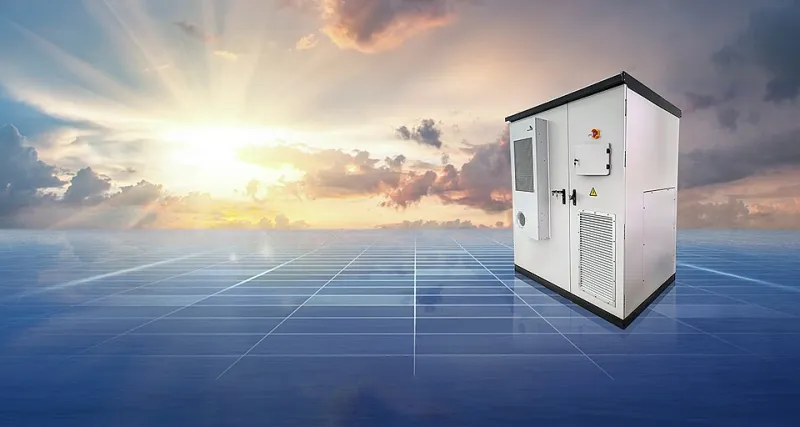
Photo: Yan lance, CC0, via Wikimedia Commons
The conversation around renewable energy storage in American manufacturing has, for years, centered almost exclusively on one technology: the lithium-ion battery. From utility-scale installations in California to behind-the-meter systems at Midwestern processing plants, battery storage has been positioned as the essential companion to solar and wind deployment. And in many respects, it deserves that reputation—it is fast, scalable, and increasingly cost-competitive.
But a growing number of sustainability officers, energy engineers, and facility managers are beginning to ask a harder question: when you account for the full lifecycle of a battery system, how clean is it really? And more importantly, is it the only answer?
The honest response is more nuanced than the industry narrative typically acknowledges.
The Carbon Embedded in Every Battery Pack
Manufacturing a lithium-ion battery is an energy-intensive process. Mining lithium, cobalt, nickel, and manganese—the foundational minerals of most commercial battery chemistries—requires significant extraction activity, often in regions with carbon-heavy energy grids and limited environmental oversight. Studies from Argonne National Laboratory and the International Energy Agency have consistently found that battery production generates between 60 and 150 kilograms of CO₂ equivalent per kilowatt-hour of storage capacity, depending on where and how the cells are manufactured.
For a large industrial facility deploying a 2-megawatt-hour battery system, that embedded carbon can represent hundreds of metric tons of emissions before a single electron flows through the system. This is what researchers call the "carbon payback period"—the time it takes for a battery's operational emissions savings to offset the emissions generated in its creation. For facilities with aggressive near-term decarbonization targets, that payback window matters enormously.
Beyond manufacturing, the supply chain itself introduces vulnerabilities that sustainability-minded facility managers are increasingly reluctant to ignore. The United States currently imports the vast majority of its battery-grade lithium and cobalt, with significant concentrations in geopolitically sensitive regions. Disruptions—whether from trade policy shifts, export restrictions, or logistical bottlenecks—can delay installations, inflate costs, and undermine the reliability of long-term energy planning.
End-of-Life: The Problem Nobody Wants to Talk About
Battery systems also carry a deferred environmental obligation that rarely appears in procurement conversations. Most commercial lithium-ion batteries have a functional lifespan of 10 to 15 years. At end-of-life, they present a complex disposal challenge: the materials are difficult to recycle at scale, and the domestic recycling infrastructure in the United States remains underdeveloped relative to the volume of batteries expected to retire over the next two decades.
The Environmental Protection Agency has flagged battery waste as an emerging concern, and several states are now developing extended producer responsibility frameworks to address it. For industrial operators, this creates a real, if deferred, liability—one that should appear in any honest carbon accounting exercise.
None of this is an argument against battery storage. It is, rather, an argument for expanding the aperture of what industrial energy storage can look like.
Where Bioenergy Fills the Gap
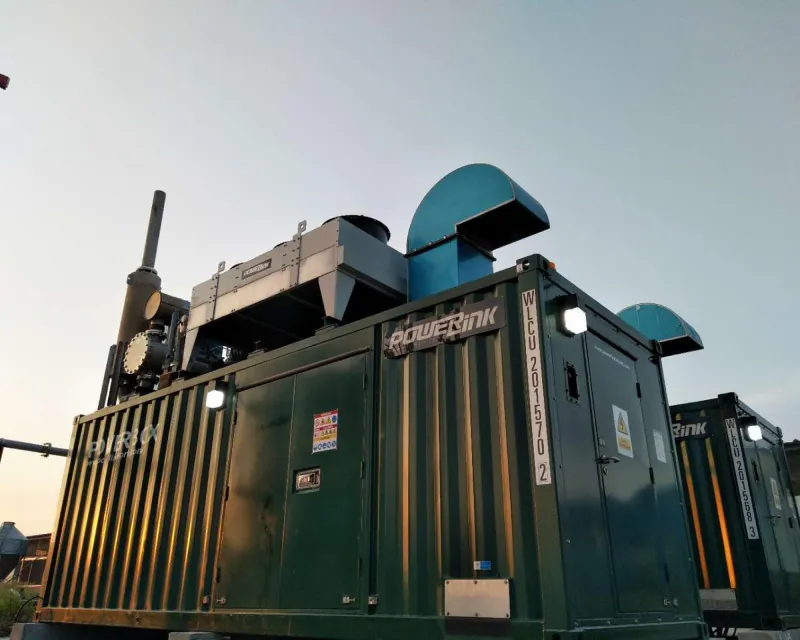
Biogas systems—which convert organic waste streams into combustible methane through anaerobic digestion—offer a fundamentally different approach to the storage and dispatchability problem. Rather than storing electrons chemically in mineral-intensive cells, biogas infrastructure stores energy biochemically in a renewable fuel that can be held, transported, and combusted on demand.
The carbon profile of a well-designed biogas system is compelling. When organic waste is diverted from landfills or lagoons and processed through anaerobic digestion, the methane that would otherwise escape into the atmosphere as a potent greenhouse gas is instead captured and converted to useful energy. The net lifecycle emissions of biogas used for on-site power generation are frequently negative—meaning the system removes more carbon from the atmospheric equation than it adds.
Critically, biogas generation is not subject to the intermittency constraints that make battery storage necessary in the first place. A biogas generator operates around the clock, independent of solar irradiance or wind conditions. This dispatchability makes it a natural complement to—rather than a replacement for—battery systems in a hybrid configuration.
Real-World Integration: What the Case Studies Show
Several forward-thinking manufacturers have begun moving beyond the either/or framing to deploy hybrid architectures that pair battery storage with on-site biogas generation. The results are instructive.
A food and beverage processing facility in the Pacific Northwest, for example, integrated an anaerobic digestion system to process its wastewater and organic byproducts alongside a smaller-than-typical battery array. By using biogas to cover baseload and overnight demand—the periods when solar generation is unavailable—the facility reduced its required battery capacity by roughly 40 percent. This not only lowered upfront capital costs but meaningfully reduced the embedded carbon associated with the battery installation itself.
A similar dynamic played out at a rendering plant in the Southeast, where methane recovered from processing waste now supplies approximately 60 percent of the facility's total energy demand. The battery system, retained for grid-outage bridging and demand charge management, operates at a fraction of the scale originally specified in early engineering designs. The facility's total carbon footprint, measured across Scopes 1, 2, and 3, dropped by more than 35 percent in the first two years of operation.
In both cases, the key insight was the same: batteries and bioenergy are not competing technologies. They solve different problems, and they solve them better together.
Rethinking the Storage Conversation for Industrial Contexts
For sustainability leaders navigating capital allocation decisions, the implications are worth sitting with. Battery storage is frequently treated as a default line item in renewable energy project budgets, with its embedded carbon and end-of-life obligations treated as externalities. A more rigorous approach demands that those costs be surfaced, quantified, and weighed against alternatives.
Biogas infrastructure, by contrast, is often dismissed as applicable only to facilities with large, consistent organic waste streams. In reality, the threshold for viable anaerobic digestion has declined significantly as technology has advanced. Food manufacturers, agricultural processors, breweries, municipal wastewater treatment operators, and a broad range of industrial facilities generate sufficient organic material to support meaningful biogas production.
The question is not whether your facility generates enough waste. It is whether you have done the analysis to find out.
A More Complete Definition of Clean Energy
At Sri Balaji BioEnergies, we work with industrial clients across the United States who are grappling with exactly this challenge. The transition to clean energy is not simply a matter of replacing fossil fuels with renewables—it requires accounting for the full carbon cost of every technology in the system, including the technologies we use to store and manage that energy.
Battery storage will remain an important tool in the industrial energy toolkit. But for facilities that are serious about minimizing their total environmental impact, biogas integration is not an optional add-on. It is a core component of a genuinely circular, genuinely low-carbon energy strategy.
The most resilient, most sustainable industrial energy systems being built today are not battery systems or bioenergy systems. They are both.