One Facility, Five Revenue Lines: How Advanced Biogas Operations Are Redefining Industrial Waste Economics
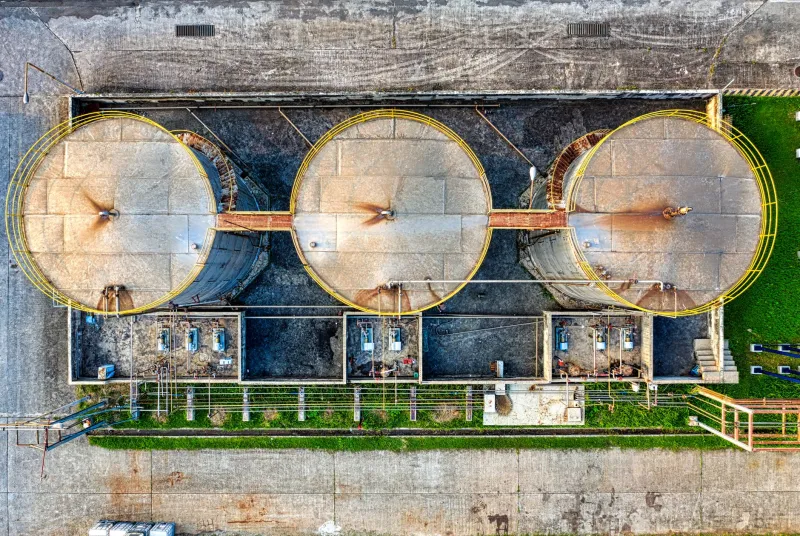
For most of the past two decades, the business case for industrial biogas rested on a single premise: convert organic waste into electricity, offset utility bills, and declare victory. That framing, while financially sound in its time, dramatically undersells what a modern anaerobic digestion system can accomplish. The facilities leading the next generation of bioenergy adoption are not building power plants. They are building resource recovery platforms — integrated systems engineered from the outset to extract maximum value from every molecule that enters the digester.
The implications for industrial finance are substantial. When a facility optimizes across five distinct revenue streams rather than one, the internal rate of return on a biogas investment can shift from compelling to transformative. Understanding how those streams interact — and how to model them together — is now a core competency for any operations or sustainability leader serious about long-term competitive positioning.
Electricity and Thermal Energy: The Foundation, Not the Ceiling
Combined heat and power, or CHP, remains the backbone of most industrial biogas deployments, and for good reason. A well-designed CHP unit captures roughly 35 to 40 percent of biogas energy as electricity and an additional 40 to 45 percent as usable heat, achieving total system efficiencies that no grid-supplied alternative can match on a cost basis.
For manufacturers with significant process heat requirements — food and beverage producers, paper mills, chemical processors, and textile facilities among them — the thermal output alone can justify a meaningful portion of the capital investment. Steam for sterilization, hot water for cleaning cycles, and heat for drying operations are all candidates for displacement by biogas-derived thermal energy. When both outputs are monetized simultaneously, the effective cost of each unit of energy produced drops considerably.
The critical modeling insight here is that thermal and electrical outputs must be evaluated against their respective displacement costs, not against a single blended energy rate. A facility paying premium rates for industrial steam generation will find that thermal displacement yields outsized returns relative to electricity displacement alone.
Digestate: Fertilizer-Grade Value From a Byproduct Most Facilities Ignore
Every anaerobic digestion system produces digestate — the nutrient-dense slurry remaining after organic material has been processed. For far too many operators, digestate management is treated as a disposal problem: something to be hauled away, land-applied at minimal value, or dewatered and landfilled at cost.
That approach leaves significant revenue on the table. Properly processed digestate is a legitimate agricultural input, rich in nitrogen, phosphorus, potassium, and a range of micronutrients in plant-available forms. Several manufacturers operating in agricultural regions of the Midwest and Southeast have formalized offtake agreements with regional farming cooperatives, converting what was previously a waste stream into a contracted revenue line.
The economics improve further when digestate is separated into liquid and solid fractions. Liquid digestate can be marketed as a liquid fertilizer product with relatively low processing costs. Solid digestate, when dried and pelletized, commands premium pricing in the retail and commercial horticulture markets — a segment that has seen sustained demand growth as synthetic fertilizer prices remain elevated.
For facilities processing food waste, municipal biosolids, or agricultural residuals, third-party digestate certification programs provide the documentation infrastructure needed to access higher-value markets. The upfront investment in certification is typically recovered within the first year of premium-priced sales.
Captured Carbon Dioxide: An Emerging Revenue Stream With Industrial Depth
Biogas as it exits the digester is a mixture of methane and carbon dioxide, typically in a ratio of roughly 60 to 40. Most systems either flare the CO2, vent it, or simply upgrade the biogas to biomethane by stripping the CO2 out and discarding it. That represents a missed opportunity of growing financial significance.
Industrial-grade CO2 is in active demand across multiple sectors: beverage carbonation, food preservation, greenhouse agriculture, pharmaceutical manufacturing, and enhanced oil recovery, among others. The US CO2 market has experienced periodic supply tightness in recent years, creating favorable pricing conditions for facilities capable of capturing and purifying biogenic CO2 to commercial specifications.
Biogenic CO2 — derived from organic rather than fossil sources — carries an additional advantage in sustainability-conscious supply chains. Food and beverage companies under pressure to decarbonize their own operations are increasingly willing to pay a modest premium for CO2 with a verified biogenic origin, as it avoids the Scope 3 emissions burden associated with fossil-derived CO2 procurement.
Installing CO2 capture and purification equipment adds capital cost, and the business case depends on proximity to end users and the scale of CO2 production. However, for mid-to-large industrial digesters processing significant organic volumes, the math frequently supports investment, particularly when CO2 revenue is modeled alongside the other streams described here.
Renewable Energy Credits and Carbon Markets: The Policy Layer
Above and beyond the physical outputs of a biogas system sits a financial layer that many operators either underutilize or navigate inefficiently. Renewable Identification Numbers (RINs) under the federal Renewable Fuel Standard, Low Carbon Fuel Standard credits in states such as California and Oregon, and voluntary carbon market offsets each represent monetizable instruments tied to the environmental attributes of biogas production.
The RIN market in particular has demonstrated the capacity to generate substantial ancillary revenue for qualifying biogas facilities. Facilities that inject upgraded biomethane into the natural gas pipeline — or that use it as a transportation fuel — can generate D3 RINs, which have historically traded at significant premiums over other RIN categories due to the policy priority placed on cellulosic and biogas-derived fuels.
Navigating these markets requires compliance infrastructure and market expertise, but the financial upside is real and material. Facilities that treat environmental attribute monetization as an afterthought routinely leave millions of dollars in annual revenue uncaptured.
Modeling the Integrated System: Where the Real Competitive Advantage Lives
The facilities achieving the strongest returns on biogas investment are not necessarily those with the largest digesters or the most sophisticated equipment. They are the ones that approached system design with multi-revenue optimization in mind from the earliest planning stages.
This means commissioning financial models that capture all five revenue streams — power, heat, digestate, CO2, and environmental attributes — under a range of pricing scenarios. It means designing physical infrastructure with the flexibility to shift output allocation as market conditions evolve. And it means building commercial relationships with offtake partners across all output categories before the system comes online, rather than scrambling for buyers after the fact.
At Sri Balaji BioEnergies, our project development process is built around exactly this integrated modeling discipline. We work with industrial clients to map their specific waste stream characteristics, energy profiles, and geographic market access against the full universe of revenue opportunities — ensuring that each system we design is optimized not just for energy output, but for total economic performance across the asset's full operating life.
The circular economy is not an abstract sustainability concept. For industrial facilities with organic waste streams, it is a concrete financial architecture. The question is not whether the opportunity exists — it clearly does. The question is whether your organization has the analytical framework and development partners to capture it fully.