The Blind Spot in Your Decarbonization Roadmap: Using Biogas to Tackle Scope 3 Emissions Your Suppliers Can't Control
For the past several years, sustainability officers at major US manufacturers have poured considerable resources into reducing what they can directly measure and control: the emissions from their own facilities and the electricity they purchase. Scope 1 and Scope 2 reductions have become the centerpiece of most corporate climate commitments, and rightfully so — they are quantifiable, actionable, and increasingly scrutinized by investors and regulators alike.
Yet a quieter, more stubborn problem persists in the background of nearly every industrial decarbonization strategy. Scope 3 emissions — those originating upstream and downstream of a company's own operations — routinely account for more than 70 percent of a manufacturer's total carbon footprint, according to data compiled by the Science Based Targets initiative. Among the most significant contributors: methane released from agricultural waste, organic processing residuals, and the upstream logistics of raw material supply chains.
The uncomfortable truth is that most facilities have no direct leverage over these emissions. Suppliers operate under their own constraints, and demanding rapid decarbonization from dozens or hundreds of vendors simultaneously is an exercise in frustration. What many organizations have not yet recognized, however, is that on-site biogas infrastructure can serve as a surprisingly effective instrument for addressing Scope 3 exposure — not by controlling suppliers directly, but by changing the economic and contractual architecture of the supply relationship itself.
Why Scope 3 Keeps Slipping Through the Cracks
The challenge with Scope 3 accounting is structural. Unlike direct combustion emissions or purchased electricity, upstream methane from organic waste streams is diffuse, poorly monitored, and often not attributable to any single buyer in a supply chain. A food processor sourcing grain from dozens of agricultural operations has no practical way to audit the methane emissions from each supplier's waste management practices. The emissions happen regardless of whether the buyer demands otherwise.
Regulatory pressure is beginning to change this dynamic. The SEC's climate disclosure rules — still evolving as of 2025 — have signaled that Scope 3 reporting will eventually become a standard expectation for publicly traded companies. Several states, including California, have moved ahead of federal timelines with their own supply chain emissions disclosure requirements. For industrial facilities operating at scale, the window for ignoring Scope 3 is narrowing considerably.
The question, then, is not whether to address upstream emissions, but how to do so in a way that is verifiable, cost-effective, and genuinely strategic rather than merely performative.
Localizing Waste Processing as a Scope 3 Reduction Lever
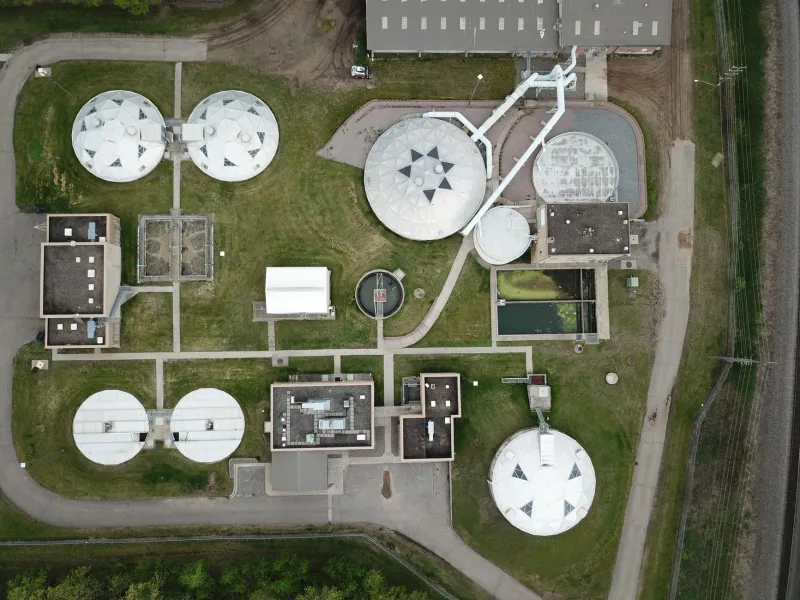
One of the most underappreciated benefits of on-site biogas infrastructure is its capacity to internalize waste streams that would otherwise be managed — and mismanaged — further up the supply chain. When a manufacturing facility installs an anaerobic digestion system capable of processing organic inputs from its own operations and those of nearby suppliers, it effectively pulls methane emissions out of the upstream category and brings them under direct operational control.
Consider a large-scale food and beverage manufacturer that sources produce from regional agricultural partners. Under a conventional arrangement, spoilage, processing residuals, and organic byproducts from those suppliers are handled independently — often through open composting, land application, or waste hauling that carries its own emissions burden. By contrast, a facility equipped with an on-site digester can contractually accept those organic waste streams, convert them into biogas for heat and power generation, and generate verifiable carbon offset credits in the process.
This model does more than reduce emissions. It creates a documented, auditable record of methane capture that can be incorporated directly into Scope 3 reporting frameworks — a level of transparency that generic carbon offset purchases simply cannot replicate.
Verifiable Offsets as a Supply Chain Negotiating Tool
The emergence of rigorous carbon verification standards — including those administered by Verra, Gold Standard, and the American Carbon Registry — has created a new category of value for industrial biogas operators. Methane capture projects that meet these standards generate credits that are not only tradable on voluntary carbon markets but are increasingly accepted as compliance instruments under state-level cap-and-trade programs.
For manufacturers navigating Scope 3 obligations, these credits carry a strategic advantage beyond their market value. They provide third-party verification that a specific quantity of upstream methane has been captured and converted — precisely the kind of documentation that satisfies investor inquiries, sustainability audit requirements, and emerging regulatory disclosure standards.
More importantly, facilities that generate verified offset credits from on-site biogas operations are positioned to use those credits as leverage in supplier negotiations. Rather than issuing unenforceable sustainability mandates to vendors, a buyer can offer to accept organic waste streams from suppliers who agree to participate in the digestion program — effectively subsidizing the supplier's own emissions reduction while capturing the offset credit value. It is a model that aligns incentives rather than simply imposing compliance burdens.
Redesigning Supplier Relationships Around Shared Decarbonization
The contractual architecture surrounding biogas-based waste processing agreements is still relatively novel in US industrial markets, but early adopters are demonstrating its viability with compelling results. Facilities in the dairy processing, brewing, and specialty chemicals sectors have begun structuring long-term organic waste offtake agreements with regional suppliers that include explicit emissions accountability provisions.
Under these arrangements, the manufacturing facility agrees to accept and process a defined volume of organic waste from each participating supplier. In exchange, the supplier receives a combination of gate fee reductions, revenue sharing from offset credit sales, and documentation of their own indirect emissions reductions — material that can be incorporated into the supplier's own sustainability reporting.
This structure transforms biogas infrastructure from a purely internal asset into a shared decarbonization platform. The facility benefits from a diversified feedstock supply that stabilizes digester performance and maximizes gas output. Suppliers benefit from a waste management solution that reduces their own environmental liability. Both parties benefit from a verifiable emissions reduction narrative that satisfies external stakeholders.
The Strategic Calculus for Industrial Facilities
Investing in biogas infrastructure has always been justifiable on energy economics alone — the combination of avoided utility costs, renewable energy credits, and potential offset revenues typically supports strong returns over a five-to-ten-year horizon. But the Scope 3 dimension adds a layer of strategic value that financial models alone rarely capture.
Facilities that establish themselves as regional hubs for organic waste processing are building something more durable than an energy asset. They are constructing a verifiable sustainability record, deepening supplier relationships through shared economic incentives, and positioning themselves favorably ahead of disclosure requirements that will eventually demand exactly the kind of documented upstream emissions accountability that biogas infrastructure can provide.
For sustainability officers and operations executives who have already addressed the low-hanging fruit of Scope 1 and 2 reductions, Scope 3 represents the next frontier — and arguably the most difficult one. On-site biogas systems will not solve every dimension of upstream emissions exposure. But for facilities with organic waste-intensive supply chains, they offer a practical, financially grounded pathway toward the kind of supply chain decarbonization that investors, regulators, and corporate procurement teams are increasingly demanding.
The blind spot in most decarbonization roadmaps is not a lack of ambition. It is a lack of infrastructure that makes upstream accountability both achievable and verifiable. Biogas, properly deployed, is exactly that infrastructure.